Pink eye · Green Bay, Wisconsin
Red, itchy, watery, or crusted shut in the morning? Don't guess at the pharmacy shelf. Get it diagnosed properly — red eyes, infections and injuries are treated on site, and walk-ins are welcome.
Know the difference
Conjunctivitis isn't one condition — and the treatment that helps one kind does nothing for another. The exam is what tells them apart.
The most common kind — watery, irritated eyes, often starting in one eye after a cold. Very contagious. Antibiotic drops don't help a virus; supportive care and good hygiene usually do.
Thicker, often yellow-green discharge that can glue lashes shut overnight. This is the kind that may genuinely need prescription antibiotic drops.
Itchy, watery, usually both eyes at once — and not contagious at all. Managed with allergy-targeted drops and avoiding the trigger, not antibiotics.
Why the exam matters
Dry eye, a scratched cornea, a foreign body under the lid, a stye, inflammation inside the eye — plenty of red eyes have nothing to do with conjunctivitis, and a few of them need very different treatment, fast.
Under the slit lamp, a trained eye can tell in minutes what's actually going on. That's the difference between an eye exam and a guess — and it's why "wait and see" or a leftover bottle of drops can cost you days of discomfort, or worse.
A red eye deserves a diagnosis, not a guess.
Where to go
Urgent care can help with a lot — but most clinics don't have a slit lamp, and a red eye examined with a penlight is easy to misjudge. An optometrist looks at the eye itself, under magnification, and treats what's actually there.
Slit-lamp examination of the cornea, lids and conjunctiva — the standard of care for any red eye.
When medicated drops are needed, they're prescribed at the visit — no second stop, no second copay.
Sixty days of complimentary follow-up visits per diagnosis, so healing gets checked — not assumed.
Red eyes behind a contact lens get extra scrutiny — infections under a lens can escalate quickly and are treated as a priority.
Common questions
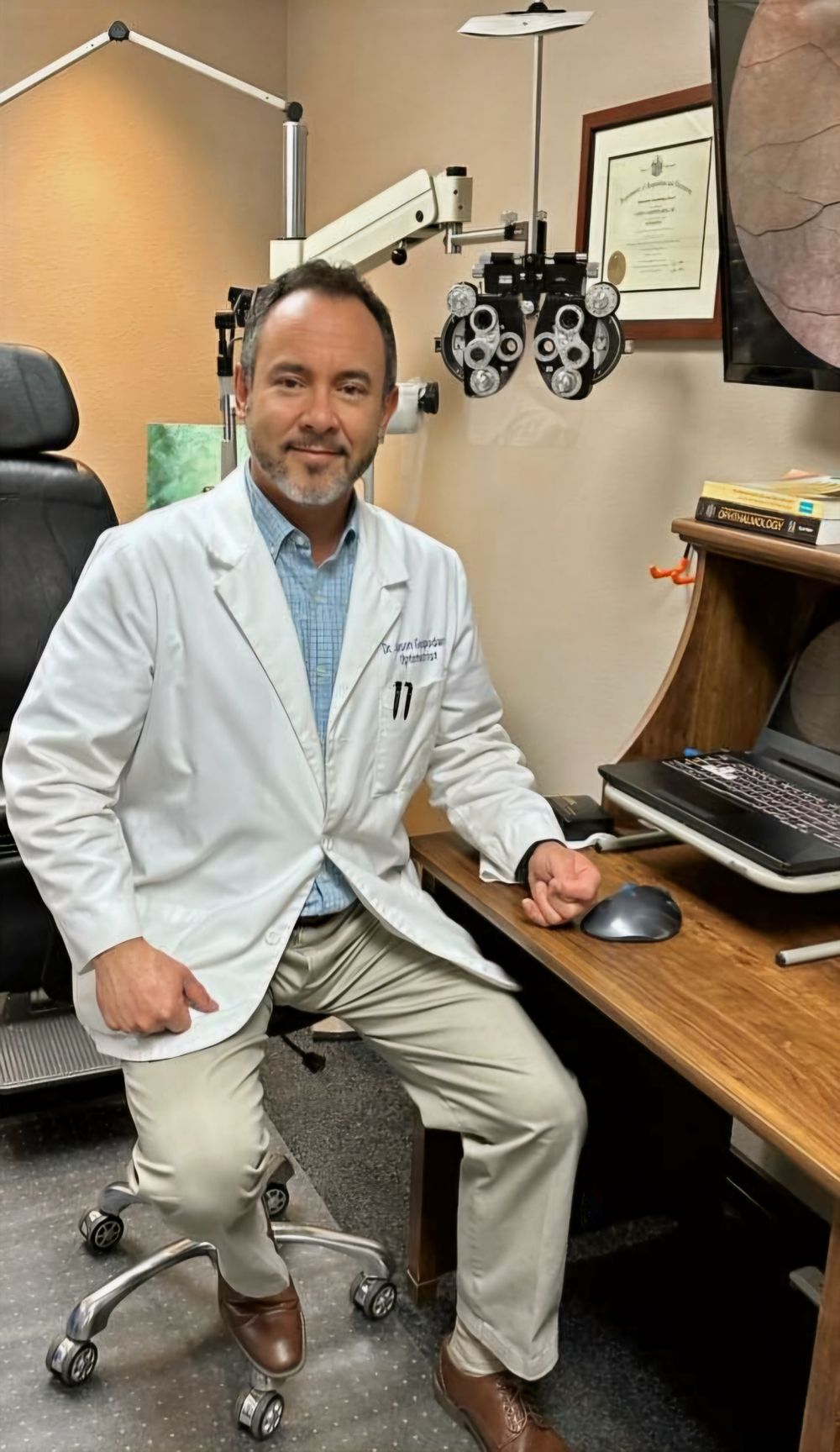
Yes. Dr. Gospodarek diagnoses red eyes with a slit-lamp examination and prescribes medicated drops when they're needed — red eyes, infections and injuries are treated on site, without a referral.
Viral and bacterial conjunctivitis are — spread by hands, towels and pillowcases. Allergic conjunctivitis isn't contagious at all. That's one reason the diagnosis matters: it determines how careful your household needs to be.
It depends on the cause, and many schools want a doctor's evaluation first. After the exam you'll know what your child has, how it's treated, and get practical return-to-school guidance for your situation.
Take it seriously. A red eye in a contact lens wearer can be a corneal infection — more serious than ordinary pink eye. Remove the lens, don't put a new one in, and get examined promptly.
Significant pain, light sensitivity, reduced vision, chemical exposure or an injury are not routine pink eye. Call the office right away at 920-355-3055 — and for sight-threatening emergencies, call 911.
Related care
The full picture of your vision and eye health — for every age.
Fittings and follow-ups that keep lenses comfortable — and eyes healthy under them.
Annual dilated exams with findings reported back to your physician.
Walk-ins are welcome, and calling ahead at 920-355-3055 helps the office fit an urgent visit into the day.
Call 920-355-3055